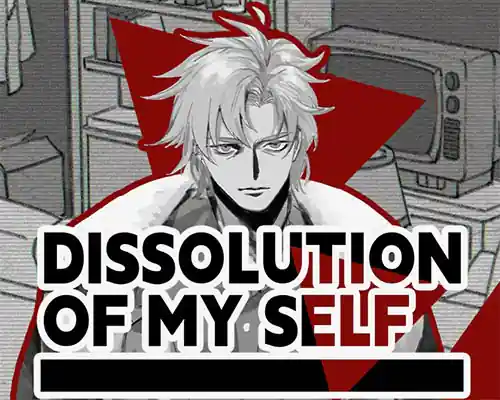
Dissolution of My Self is a point-and-click psychological horror game centered on exile, dependence, and the gradual breakdown of identity.
A Prince With Nothing Left
Power can disappear. So can a person.
There are no monsters waiting around corners and no combat to worry about. Instead, Dissolution of My Self puts all its weight on an uncomfortable relationship between two people trapped together after the fall of their kingdom.
The demo takes roughly 30–50 minutes, although the exact time depends on reading speed.
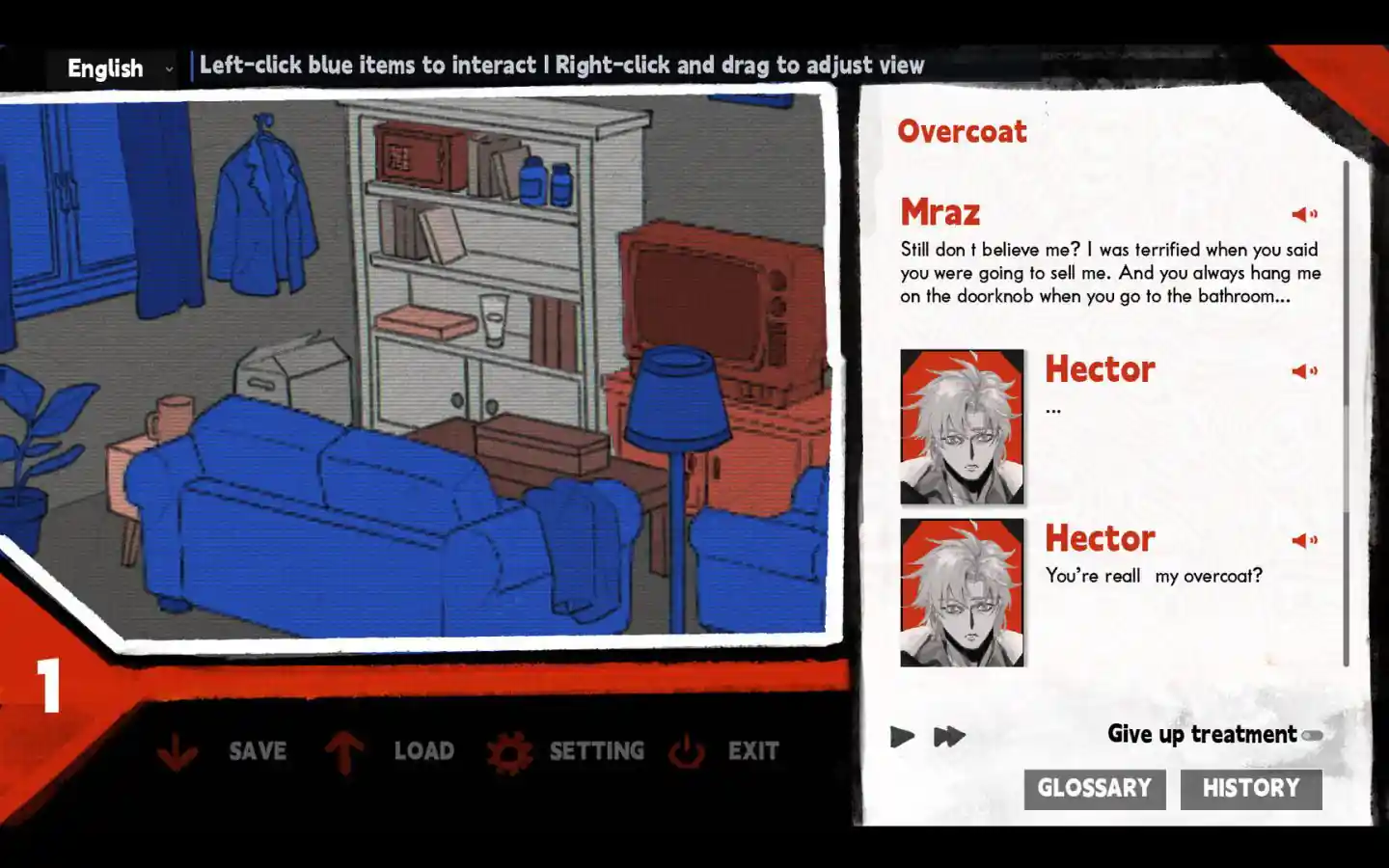
The story begins in an ordinary rented room far from home. For Hector, however, nothing in that room feels ordinary. A window, television, dining chair, medicine bottle, and other everyday objects all carry pieces of a past he would rather erase.
Hector is an exiled prince who has lost his kingdom, his position, and nearly everything that once defined him. The only person who remains by his side is his uncle and former aide-de-camp, Matvey. Their relationship has survived exile, but what remains between them is anything but healthy.
As objects are examined, fragments of Hector’s memories begin to surface. The more the past comes back, the clearer the disturbing bond between the two becomes. Dependence turns into control, tenderness becomes cruelty, and affection is tangled up with resentment and violence.
Today, Hector wants to forget everything.
Two People Trapped in the Same Life
Hector — CV: Netoru Irakusa
“Your body is my only territory.”
Hector is the prince of a fallen kingdom, now living in exile inside a rented apartment far from the country he once belonged to. His homeland, identity, and future are gone, leaving him heavily dependent on Matvey in Dissolution of My Self.
That dependence carries plenty of anger with it, but also affection and love. All of those feelings become increasingly tangled as Hector moves toward complete self-dissolution.
Matvey — CV: Tetsuto Furukawa
“If you were nothing more than family to me, my child would be old enough to walk by now.”
Matvey is Hector’s uncle and former aide-de-camp. After the kingdom collapsed, he escaped with Hector while using an alias. He now keeps them afloat by working as an unlicensed electrician.
For Hector, Matvey is far more than an uncle. He becomes a subject, caregiver, wife, mother, and caretaker all at once. The relationship is deeply dependent, unequal, and increasingly difficult to separate into anything resembling a normal family bond.
Exploring Memories One Object at a Time
The main gameplay revolves around investigating the rented room. Objects are more than simple scenery. Interacting with them unlocks pieces of Hector’s memories and gradually reveals what has happened between the two characters.
The order matters, too. Whatever gets touched first is what Hector remembers first. This changes the pacing and flow of the narrative, although it does not change the ending. There is only one ending, and the available choices don’t lead to another route or a second storyline.
There is also a catch: Hector isn’t necessarily a reliable narrator in Dissolution of My Self.
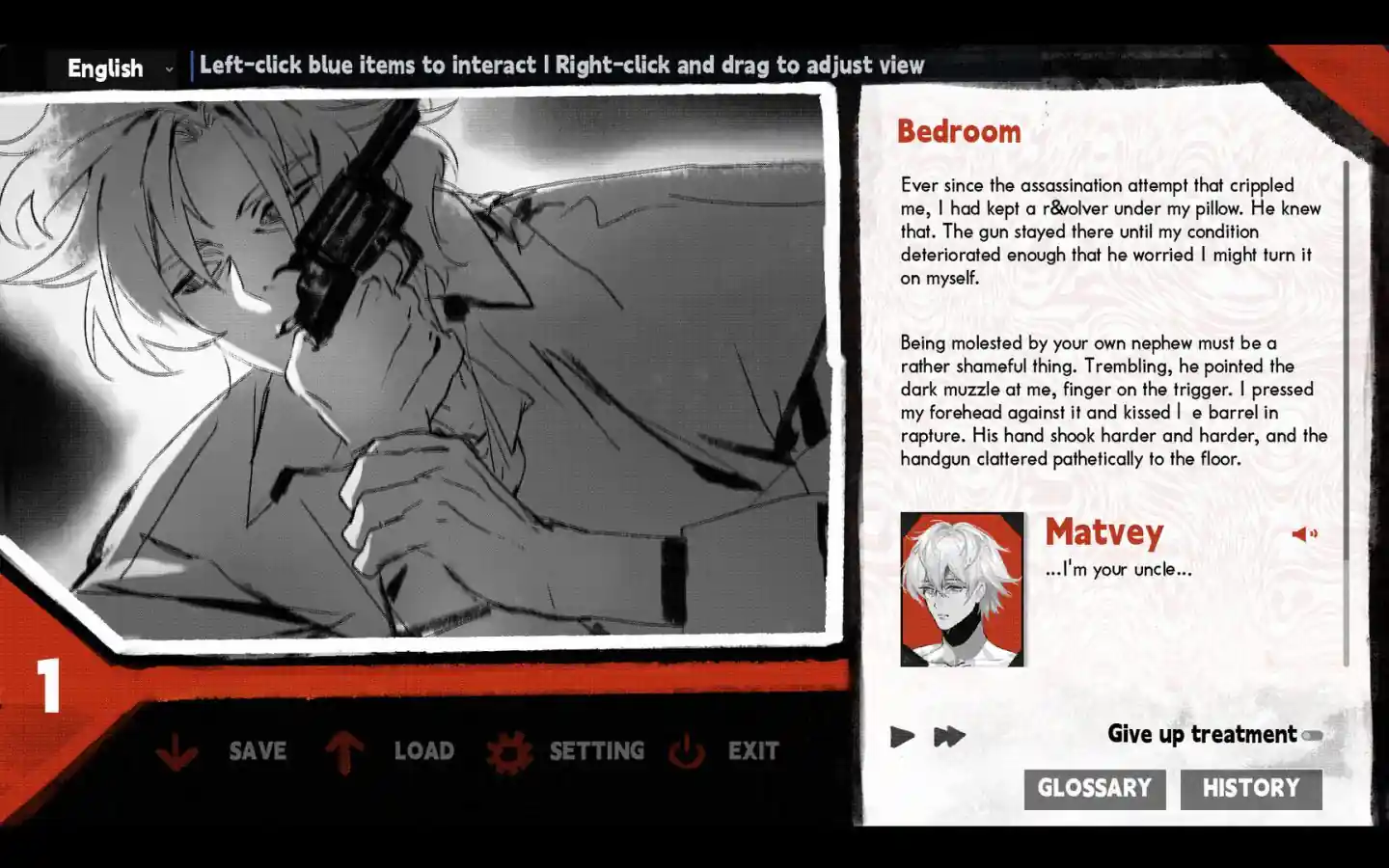
Features of Dissolution of My Self:
- The horror here comes from confinement, exile, emotional dependence, and the unhealthy decay of family affection, romantic attachment, and devotion to a lost country. There are no monsters, combat sequences, or reliance on cheap jumpscares.
- Instead, Dissolution of My Self creates a slow, oppressive feeling that grows as more of Hector and Matvey’s relationship comes into view.
- Their bond shifts between several roles at once: uncle and nephew, sovereign and subject, caretaker and patient, and even the disturbing dynamic of “mommy” and her manchild. It is intimate in a way that feels deliberately uncomfortable at Dissolution of My Self.
- The dark humor helps, too. Some of the jokes are so bleak that they land somewhere between funny and deeply
Minimum System Requirements:
- OS: Windows 10 (64-bit)
- Processor: Intel Core i3-3220 / AMD FX-4300 or equivalent
- Memory: 4 GB RAM
- Graphics: Intel HD Graphics 4000 / AMD Radeon HD 7730 / NVIDIA GeForce GT 630 (OpenGL 3.3 or DirectX 11)
- DirectX: Version 11
- Storage: 1 GB available space
- Additional Notes: 1280×720 or higher
Unlock Download Links
You might also like:
 Urban Myth Dissolution Center Free Download (Build 17947463)
- The Liar Princess and the Blind Prince Free Download (Tenoke)
- Path of Exile Free PC Download (v20221117)
- The Life and Suffering of Prince Jerian PC (Goldberg)
- Prince of Persia The Lost Crown PC (VOICES38-B17528300)
- A Story About My Uncle PC Download (v1822049)
- The Lost Prince PC Free Download
- Prince of Persia The Two Thrones Free Download