
He Who Watches is a first-person puzzle game built around strange spaces, clever mechanics, and a mysterious god trapped somewhere.

Walk across walls, shift gravity, and uncover secrets hidden deep inside an ancient labyrinth.
He Who Watches drops players into a structure that seems to ignore the usual rules of space. Rooms twist in unexpected ways, perspectives change, and every surface can become part of the route. Solving each chamber takes a mix of spatial awareness, experimentation, and a willingness to stop and think.

Wizordum PC (v1.2.05.01 Final)
A Puzzle World Where Gravity Has No Rules
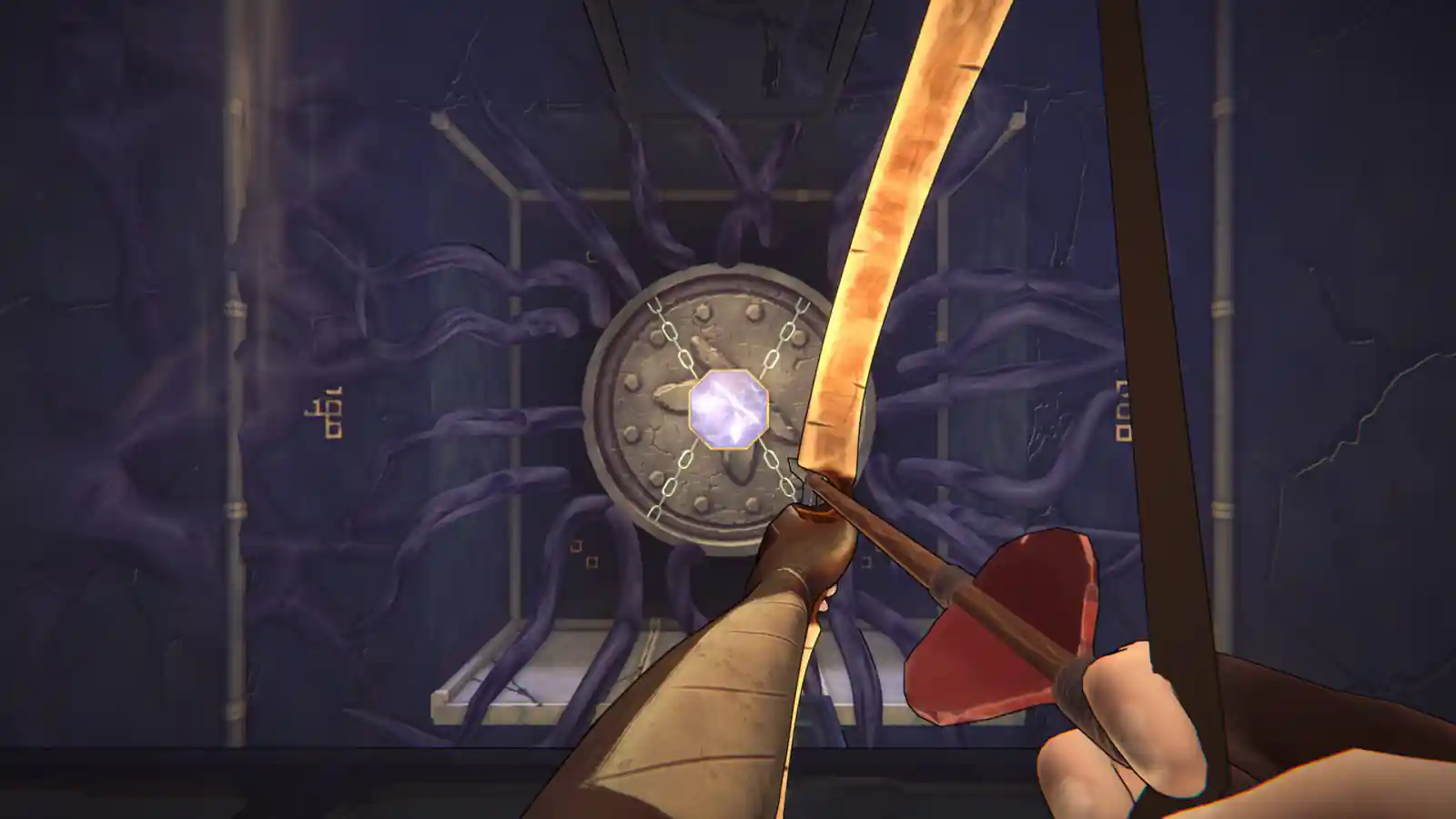
The bow is a key part of the puzzle-solving toolkit rather than a traditional weapon. Its single magical arrow can interact with the environment in several ways. Doors can be opened, blocks moved, switches activated, and gaps crossed by using the arrow’s magical chain to pull the player forward.
Gravity is where things get especially interesting. Walls can become floors, ceilings can become walkways, and shifting between different planes can set off a series of actions that reveal the way ahead. Some solutions take a little patience, but figuring them out feels rewarding rather than forced.
There is plenty more hidden inside the labyrinth, too. Secret routes, unusual mechanics, and cryptic symbols encourage a closer look at the environment. The central mystery remains the same throughout: what is this enormous structure hiding, and what exactly awaits at its centre? Somewhere inside sits an imprisoned god, waiting to be found.
Clever Puzzles With Plenty to Discover
The puzzle design is one of He Who Watches’ biggest strengths. Logic, experimentation, and discovery work together nicely, while new mechanics build naturally on ideas introduced earlier. Each hub contains more puzzles than are required to move forward, which is a welcome touch when a particular challenge refuses to click. A difficult puzzle can simply be left for later and revisited with a fresh perspective.
The hubs themselves are puzzles in their own right. Exploring them reveals additional layers and secrets, giving curious players plenty of reasons to look beyond the obvious route.
The puzzles are genuinely satisfying, especially for anyone who enjoys getting that logic-loving part of the brain working. The familiar idea of doors and switches gets a fresh spin through the bow-and-arrow system, while walking along walls and ceilings completely changes how each room needs to be approached. And, quite simply, firing the magical arrow never gets old.
Smooth Movement and Helpful Guidance
Movement feels quick and responsive, while the otherworldly visuals fit He Who Watches’ unusual approach to space. With no fixed concept of “up,” the idea could easily have become confusing, but the mechanics are presented with impressive polish. There is also a dedicated feedback option in the menu, suggesting He Who Watches can continue to improve over time.
The difficulty also feels thoughtfully balanced. Optional mini-levels known as Guidance Altars can introduce new mechanics when needed. They can be skipped entirely for anyone who prefers to work things out without assistance, or used to demonstrate an interaction that might otherwise go unnoticed.
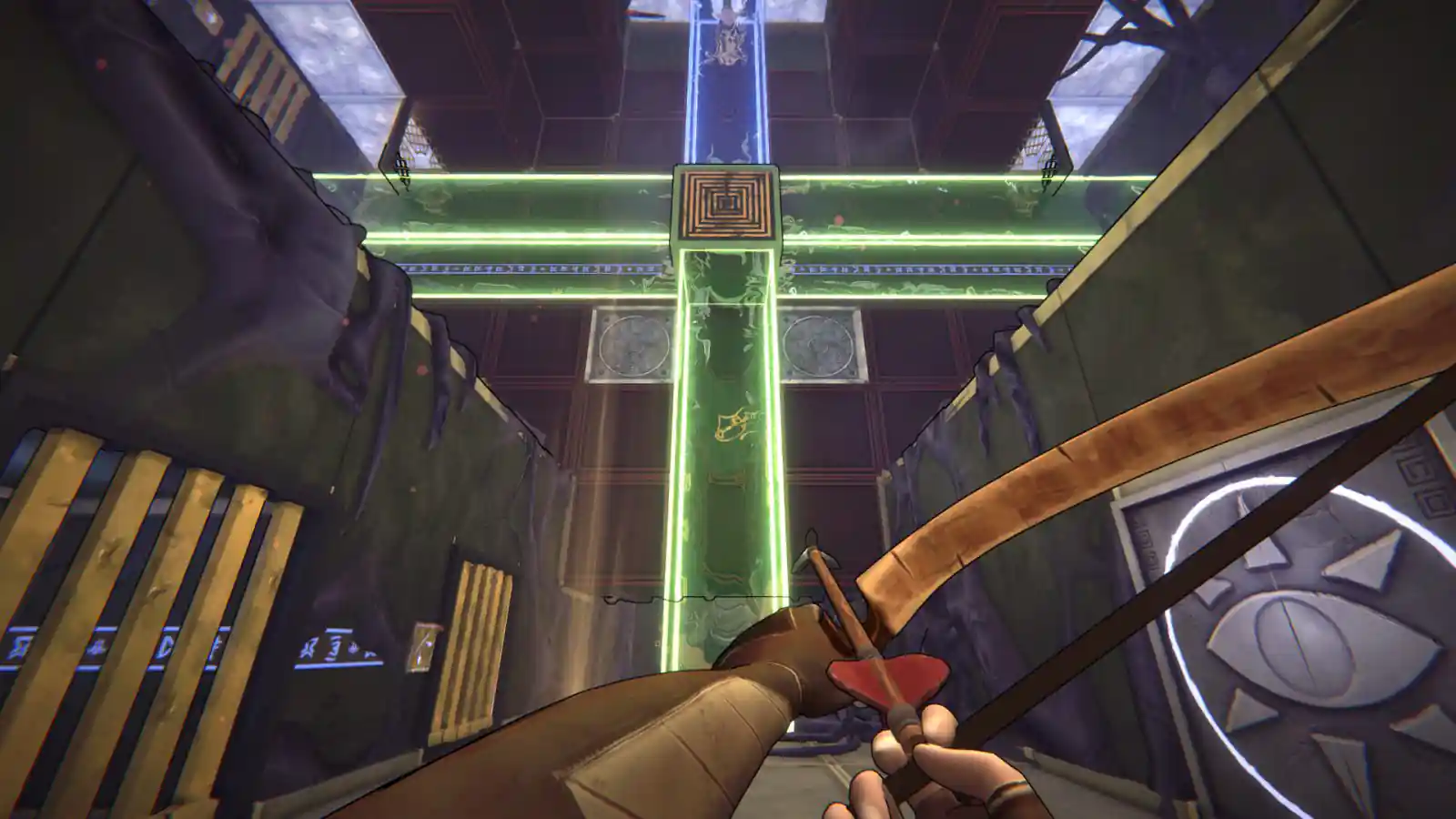
Features of He Who Watches:
- Created by solo developer Bobby Vanden
- Published by puzzle specialists Draknek & Friends
- More than 100 handcrafted puzzles to solve
- A playable hint system for moments when a solution proves difficult
- Hidden paths, secrets, mechanics, and symbols scattered throughout the labyrinth
- Gravity-based movement that allows exploration across walls and ceilings
- A magical bow and arrow used in He Who Watches as a tool for interacting with the environment
- Optional Guidance Altars that introduce new mechanics
- No generative AI was used during development
Minimum System Requirements:
- Requires a 64-bit processor and operating system
- OS: Windows 7
- Processor: 2.4 GHz
- Memory: 4 GB RAM
- Graphics: Nvidia GeForce 970
- DirectX: Version 10
- Storage: 9 GB available space
File Size: 1.57 GB
You might also like:
 Gravity Field PC Game Free Download
- Rogue Labyrinth PC Free Download (Final)
- 迷宮校舎 | School Labyrinth Free Download (v2.0.5)
- Invertigo PC Free Download (Tenoke)
- Deep Sleep: Labyrinth of the Forsaken Free (Build 19702114)
- Labyrinth of Galleria The Moon Society Free
- Bow Down & Eyes Up PC Free Download (Final)
- Etherborn PC Game Free Download