BURNED HORIZONS gets into two hundred meters out. Tree line. The squad drops into cover almost before the warning finishes.
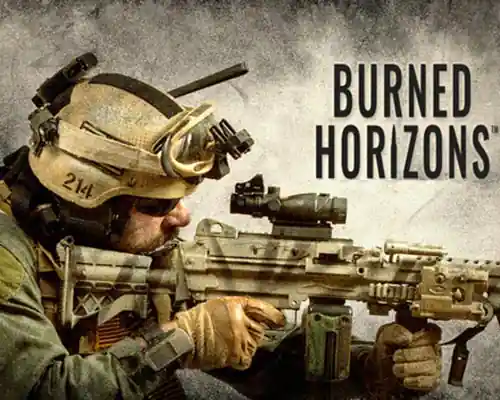
Another firefight. Another decision that could follow the team long after the shooting stops. Ukraine, 2002. Officially, the role is NAFOSEC’s (PMC) Operational Lead in the theater. In practice, the work is far more hands-on: operating from a forward bivouac, checking equipment, directing contractors, and making split-second decisions once the bullets start flying. The end of an engagement doesn’t mean the consequences end with it. Contractors carry physical injuries and psychological strain from one operation into the next.
Wounds reduce what an operator can do, trauma can change how they behave under pressure, and casualties may need to be extracted from the field. Every squad sent into an operational area comes with responsibility for the decisions made there—and those decisions can follow the team long after the last round is fired. “It’s not just about winning the battle; it’s about surviving the war, with all the scars that entails.” — Gungho Cowboy, Popular Airsoft Injuries are based on physical trauma and physiological failure rather than a simple health bar. Bullets damage tissue, tear through arteries, and fracture bones. Taking cover doesn’t undo any of it.
Spec Ops The Line PC Game Free Download
A leg injury can destroy mobility. Damage to an arm can make controlling a rifle difficult or impossible. Keeping an operator alive means treating the injury in the field, applying tourniquets while under fire, stabilizing serious trauma, and getting CASEVAC moving before blood loss becomes fatal. A leg wound changes how an operator moves. An arm wound changes how they handle their weapon in BURNED HORIZONS. “That’s a permanent souvenir, a little something to remember the holiday by.” — Gungho Cowboy, Popular Airsoft Equipment affects performance rather than simply changing appearances. Armor plates only protect the areas they cover.
Chest rigs affect magazine access and handling speed. Heavy rucksacks consume stamina before the squad even reaches its objective. Weapons can be customized with real components, including slings, mounts, optics, and other attachments. These choices affect ergonomics, recoil behavior at BURNED HORIZONS, muzzle rise, and overall weapon handling. Build the loadout around the mission ahead. A poorly equipped squad can arrive exhausted before the enemy ever gets a chance to fire. No operator arrives in the theater fully developed, and two people exposed to the same conditions won’t necessarily grow in the same direction.
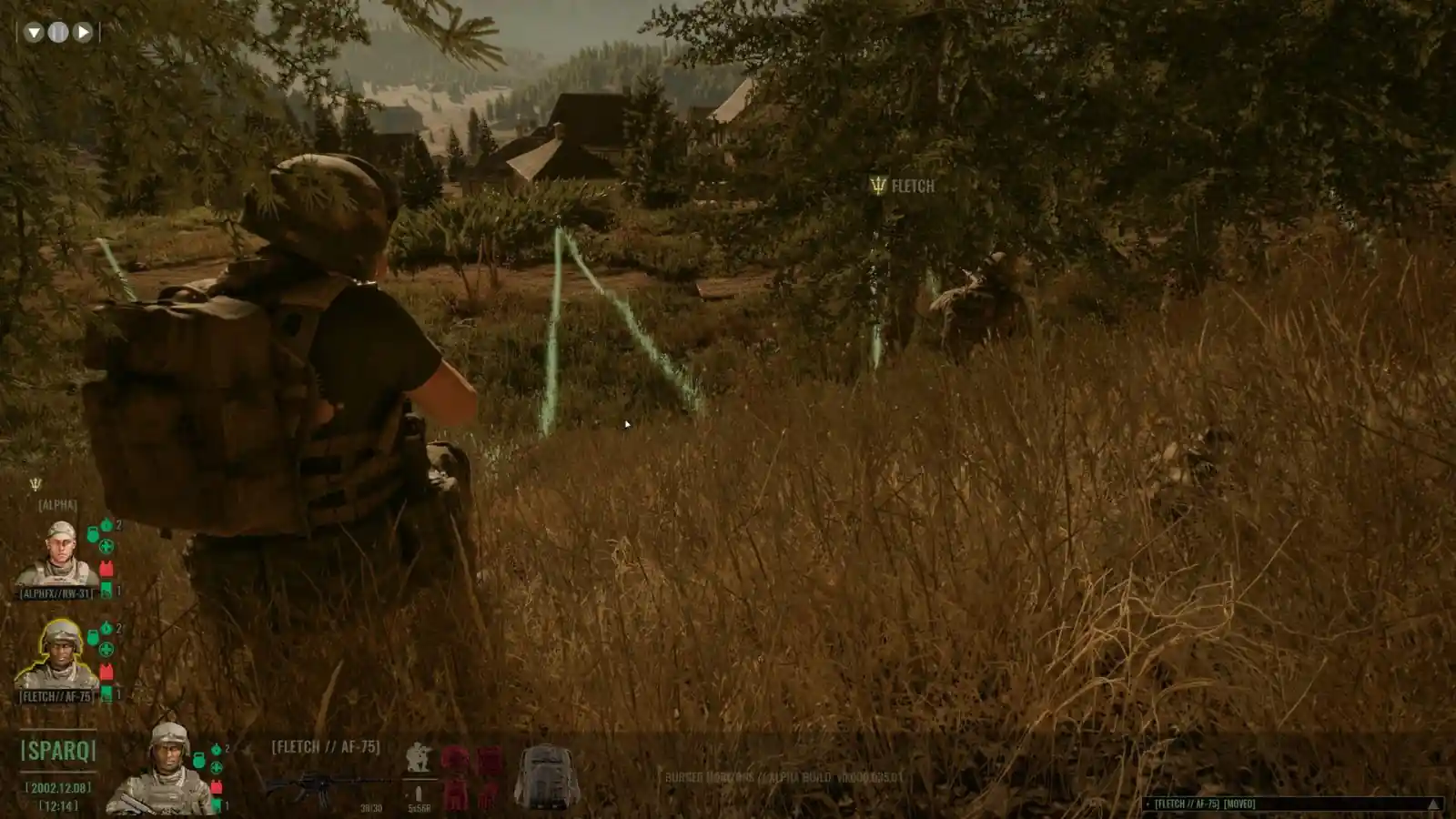
Features of BURNED HORIZONS:
- Full armor and loadout system: Configure plate carriers, rigs, rucksacks, and other equipment.
- Deep weapon customization: Use real components, attachments, optics, mounts, and slings.
- Customizable SOP settings: Adjust difficulty and the overall experience to suit the preferred playstyle.
- Pathway specializations: Skills develop from the work operators actually perform.
- Extensive modding support: Sliders, toggles, and additional customization options.
- Persistent squads and consequences: Operators, relationships, injuries, and decisions carry forward throughout the campaign in BURNED HORIZONS.
- Squad trust and cohesion: Relationships change through shared experiences and battlefield outcomes.
- Multiple perspectives: Play from top-down, isometric, or third-person views.
- CASEVAC and reinforcement support: Request extraction and additional support directly from the field.
- Realistic wounding: No traditional health bars and no automatic healing.
- Deep tactical combat: Action points, suppression, overwatch, interrupts, and other battlefield mechanics.
- Core Attributes describe the abilities an operator brings into the theater: staying calm during a crisis, handling triage, keeping teammates together, and other traits that shape their potential when things go wrong. Experience then comes from what actually happens in the field. Put a designated marksman on point duty for several operations, and the result won’t simply be better long-range shooting.
Minimum System Requirements:
- OS: Windows 10 (64-bit)
- Processor: Intel Core i5-4430 / AMD FX-6300
- Memory: 16 GB RAM
- Graphics: NVIDIA GeForce GTX 1060 3GB / AMD Radeon RX 480 4GB
- DirectX: Version 12
- Storage: 40 GB available space
- Additional Notes: SSD Recomended
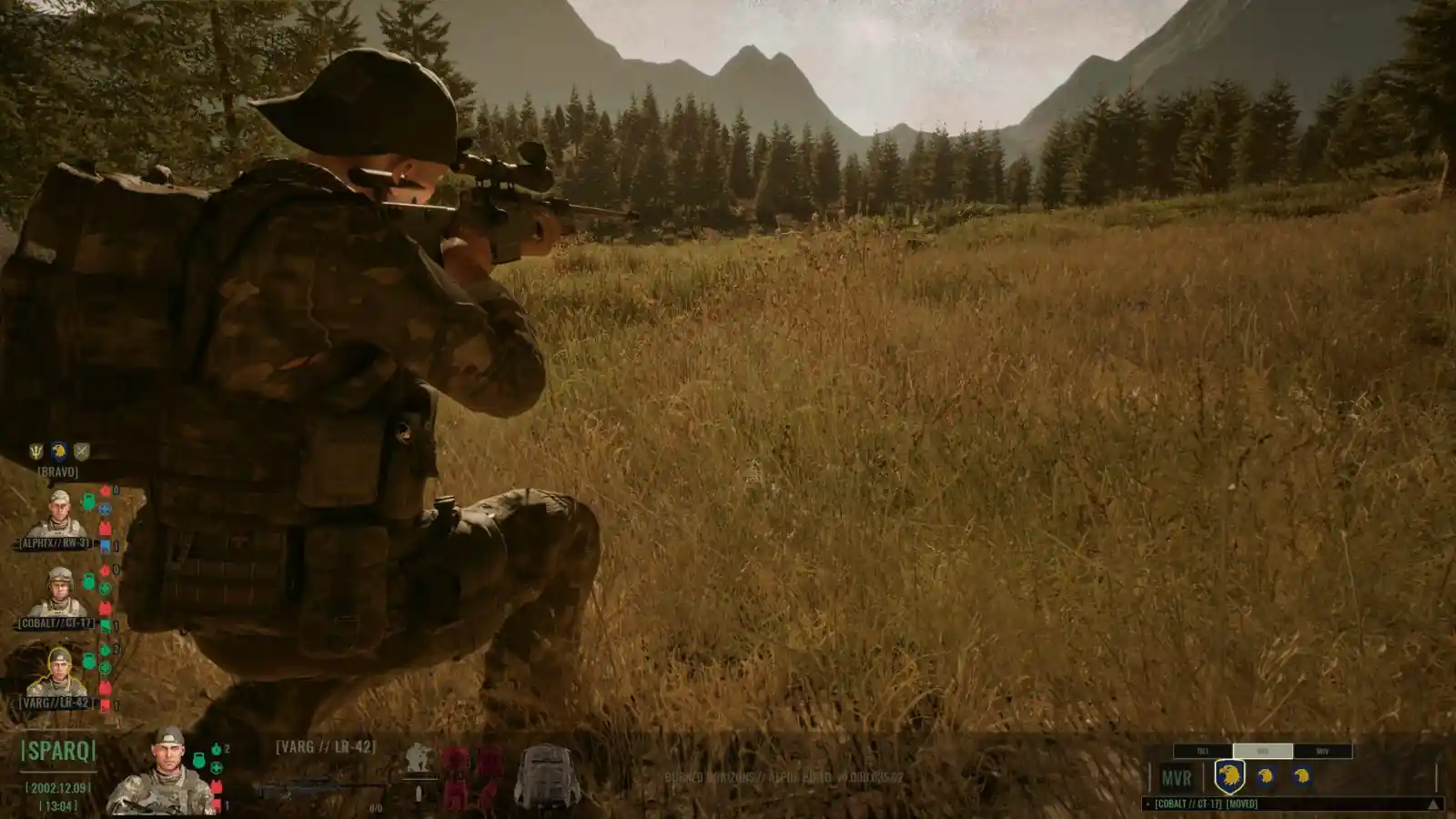
You might also like:
 Dino Trauma PC (v0.5.842 Early Access)
- Drive Beyond Horizons PC (v20260830+New Vehicles)
- Ultimate Theater Simulator PC (v1.4.0)
- Between Horizons PC Free Download (Build 18726658)
- Crisol: Theater of Idols PC (v1.3 Final)
- OPERATOR PC Game Free Download (v0.08.4431)
- BattleBlock Theater PC Game Free Download
- Burned Land PC Game Free Download